WaveGauge — 8 min read
Fins are the steering wheel of your surfboard. This guide explains thruster, quad, and twin fin setups, fin size, and how to choose the right fin configuration for your river wave.
Fins are the steering wheel of your surfboard. They provide drive (forward speed), hold (keeping the board from sliding out), and control (the ability to turn). The right fin setup can completely change how a board feels under your feet.
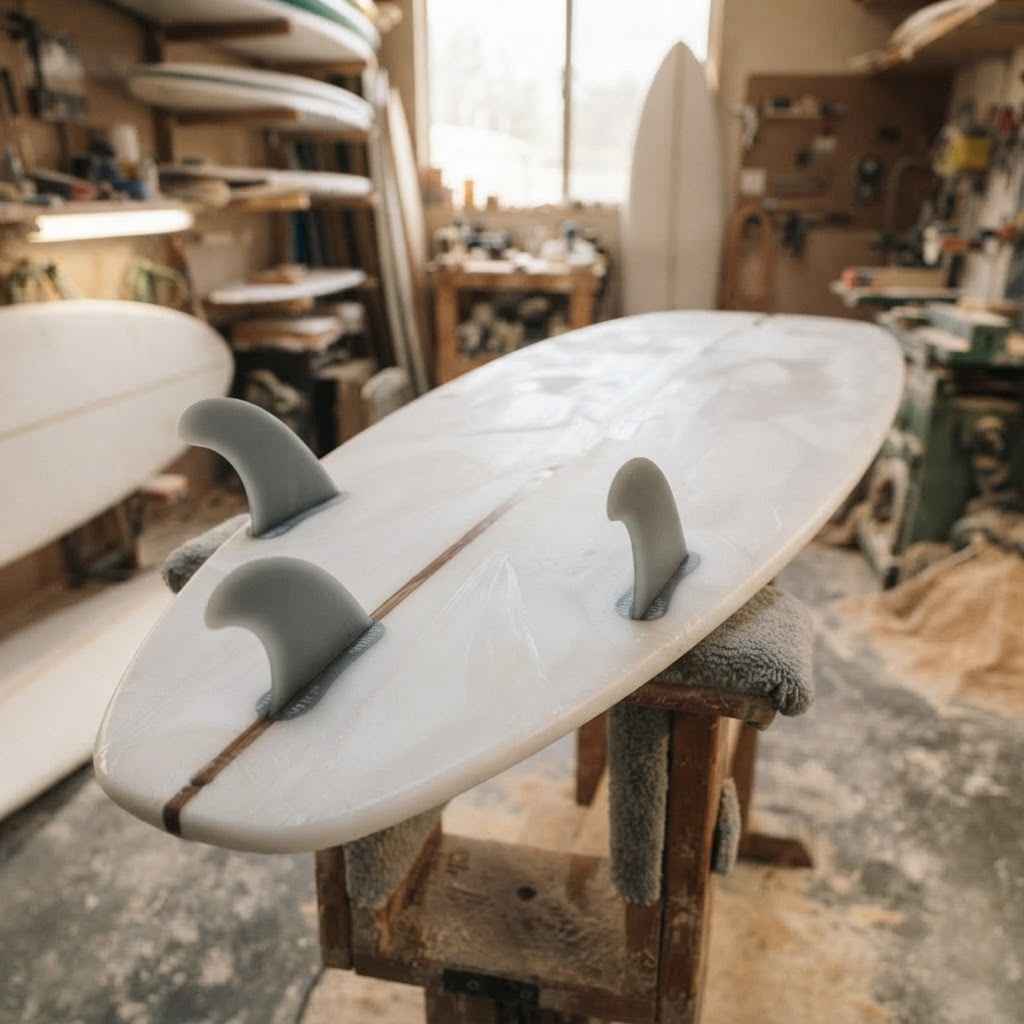
Pictured above: thruster. Two rail fins sit forward of a trailing center fin, forming a triangular cluster. The blades have swept-back tips and bases aligned along the board; the center fin sits on the stringer.
The thruster is the most common fin setup in river surfing — and for good reason. It uses three fins: one in the center (the center fin) and two on the sides (the rail fins).
How it works: The three fins work together to provide a balance of drive, hold, and control. The side fins are angled inward (toed-in) to direct water toward the center, creating drive. The center fin provides hold and prevents the tail from sliding out during turns.
Best for:
The Badfish 3.5" Thruster Fin Set is a popular, affordable option designed specifically for river boards.
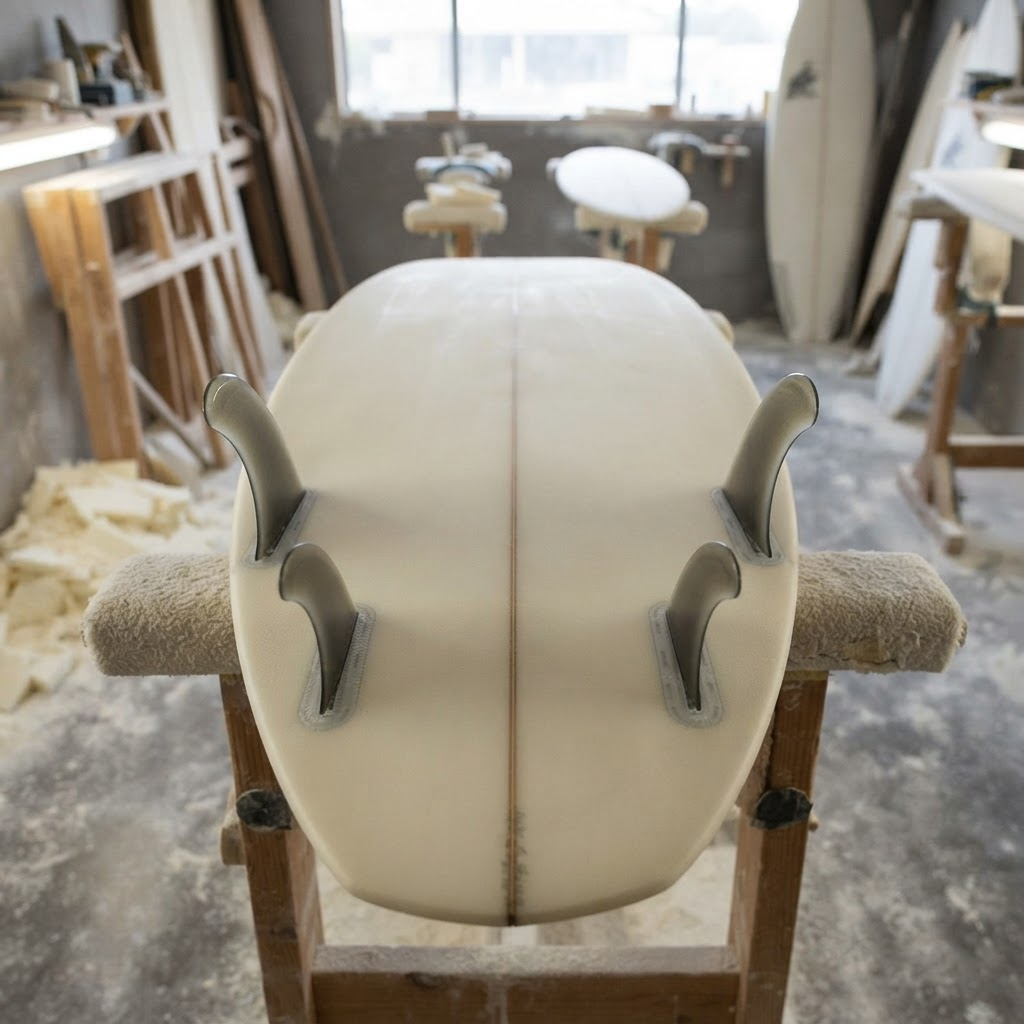
Pictured above: quad. Two larger front fins and two smaller rear fins form mirrored rail-side pairs. The rear pair sits slightly inboard, and the centerline is clear—there is no center fin.
The quad setup uses four fins: two on each side, positioned in pairs near the rails. There's no center fin.
How it works: Without a center fin creating drag, quads generate more straight-line speed. The four fins provide hold through the rail, making them fast and drivey. Quads tend to feel looser than a thruster — they release from turns more easily.
Best for:
Tradeoff: Less hold than a thruster in steep or choppy waves. The board can feel like it wants to slide out on aggressive turns.
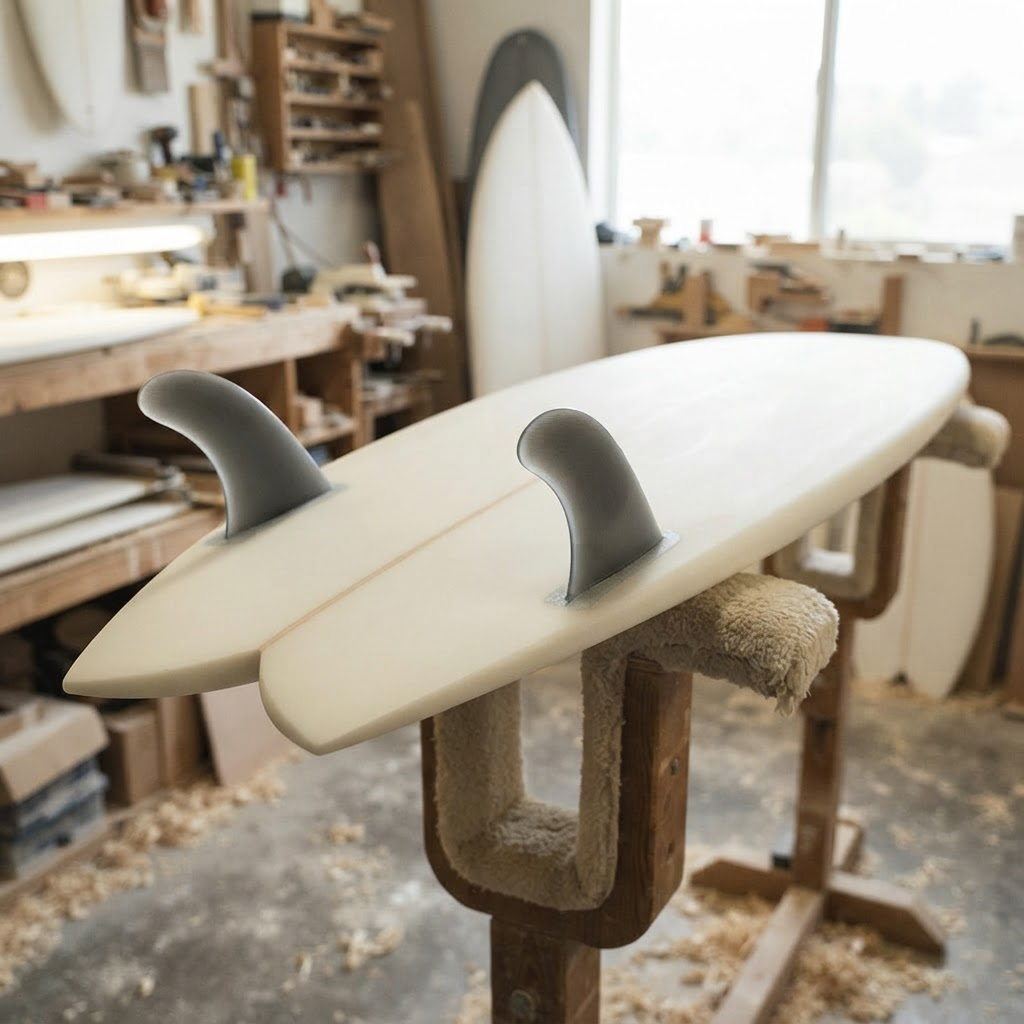
Pictured above: twin-fin fish board. Two matching swept-back fins sit near the rails ahead of the swallowtail, leaving the centerline clear.
The twin fin uses just two side fins — no center fin.
How it works: Twins are fast and loose. With only two fins, there's minimal drag, so the board accelerates quickly. They turn easily and feel skatey — great for flowing, drawn-out turns.
Best for:
Tradeoff: Least hold of the three setups. Can spin out on steep drops or aggressive turns. Not ideal for fast, punchy river waves.
The 2+1 setup — also called a "twin + trailer" — uses two larger front fins (similar to a twin fin) paired with a smaller trailing center fin (the trailer). It's the best of both worlds: loose and skatey like a twin fin, but with a little more hold through turns, like a thruster.
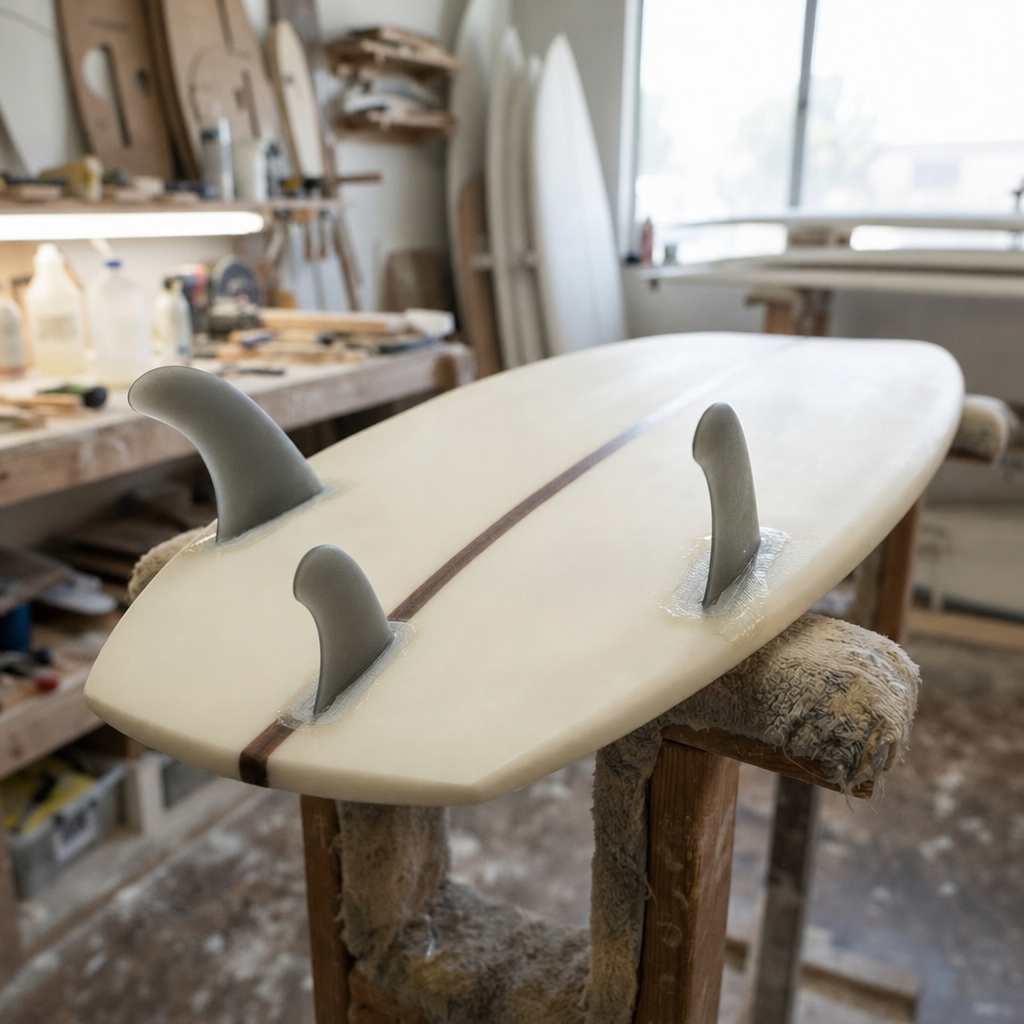
Pictured above: 2+1 (twin + trailer). Two larger swept-back fins sit near the rails up front, with a smaller trailing center fin set behind them on the stringer.
How it works: The two larger front fins give you the speed, looseness, and skatey feel of a twin — minimal drag, easy acceleration, and wide, flowing turns. The smaller trailing fin (typically about half the height of the front fins) sits behind the twins on the centerline and acts as a pivot point and stabilizer. It adds hold through turns and keeps the tail from sliding out on steeper drops or harder carves — the one thing a pure twin struggles with. The result is the flow and freedom of a twin with a bit of the control and hold of a thruster.
Best for:
Tradeoff: The trailer adds a little drag, so you lose some of the effortless, drag-free speed that makes a pure twin feel special. It also tames some of that loose, skatey freedom — not eliminated, but muted. It's a compromise: not as free as a pure twin, not as locked-in as a full thruster.
| Setup | Drive | Hold | Speed | Control | Best Wave Type |
|---|---|---|---|---|---|
| Thruster (3) | Medium | High | Medium | High | All-around, choppy, steep |
| Quad (4) | High | Medium | High | Medium | Small, mushy, speed runs |
| Twin (2) | High | Low | High | Low | Small, soft, fish boards |
| 2+1 (twin+trailer) | High | Medium | High | Medium-High | Versatile — twin feel with added hold |
Fin size is measured in inches (height) and base width. For river surfing, shorter fins (3"–3.5") are common for a few reasons:
Larger fins (4"+) provide more hold and drive but can feel stiff and catch in shallow water. They're better for larger surfers or faster, steeper waves where you need extra hold.
Fin placement (how close the fins are to each other and to the tail) also affects performance:
Most river boards come with a fixed fin placement
If you're a beginner: Start with a thruster. It's the most forgiving and predictable setup. Most river boards come with a thruster configuration out of the box.
If you surf small, mushy waves: Try a quad. The extra speed can help you stay on waves that don't have much push.
If you surf a fish-style board: A twin or quad pairs well with the fish shape, giving you that classic loose, skatey feel.
If you surf fast, steep, modern waves: Stick with a thruster. The hold and control help you manage speed and chop.
Fins are a relatively inexpensive way to completely change how your board feels. A $35 fin set can transform a board you're struggling with into one that clicks. Don't be afraid to experiment — most river surfers keep a few different fin setups in their quiver for different conditions.
--- Illustrations are AI-generated educational examples, not photographs of a specific product or scale-accurate installation guides. Fin dimensions and placement vary by board.
Sources: SurferToday quad guide, Boardcave twin-fin guide, True Ames fin guide, Hawaiian South Shore fin guide, Badfish SUP, Waterboyz, Kanoa Surf