WaveGauge — 6 min read
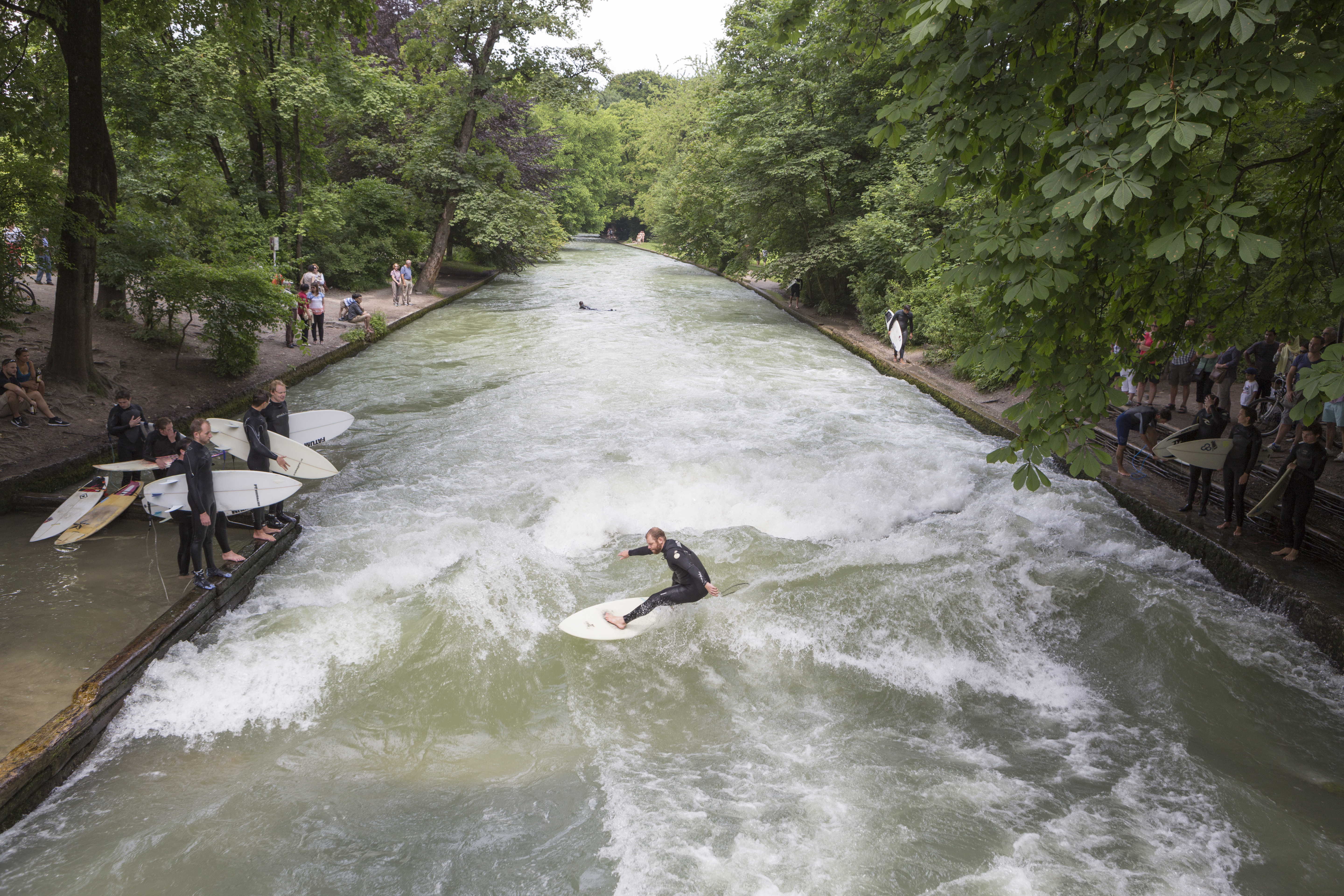
River surfing is exactly what it sounds like — surfing on a river instead of the ocean. But instead of riding a moving wave toward shore, you surf a stationary wave that stays in one place. Here's everything you need to know to understand this fast-growing sport.
River surfing is exactly what it sounds like — surfing on a river instead of the ocean. But there's a twist: instead of riding a moving wave toward the shore, you surf a stationary wave that stays in one place. The water rushes toward you while you ride back and forth across the face, like a surfer on a treadmill.
The Scout Wave in Salida, Colorado — a standing wave in a whitewater park.
A standing wave forms when water flows downhill over an object — a rock, a ledge, or an engineered structure in a whitewater park. The water speeds up as it passes over the obstruction, and when it hits a slower-moving pool downstream, the water "jumps" into the shape of a wave.
Unlike the ocean, where a wave builds, peaks, breaks, and dissipates, a river wave is locked into one of those phases — constantly reforming in place. The wave doesn't move. You do.
This means you can ride the same wave for as long as you can keep your balance (and as long as the lineup lets you). No paddling back out, no waiting for sets. Just endless riding.
The biggest difference? The wave is stationary and the water comes at you. That takes some getting used to, even for experienced ocean surfers.
| River Surfing | Ocean Surfing | |
|---|---|---|
| Wave | Stationary, stays in place | Moves toward shore |
| Ride length | Unlimited (until you fall) | A few seconds to a minute |
| Predictability | Very predictable | Changes with swell, wind, tide |
| Paddling back out | Not needed | Required after every wave |
| Culture | Relaxed, welcoming | Can be localized |
As Riverbreak puts it: "The crowd is usually just as stoked as you are." River surfing culture tends to be more welcoming than ocean surfing — people share tips, loan boards, and cheer for each other.
1. Natural River Waves — These occur naturally in rivers and tend to have a shorter window when they're working, depending on flows. This is how river surfing got its start. Natural waves come with their own set of challenges and safety concerns — always connect with a local the first time you surf one.
Unknown surfer riding a natural river wave on the Arkansas River.
2. Whitewater Park Waves — These are the most common entry point for new river surfers. Whitewater parks are public, free, and use engineered features to create surfable waves. Famous spots include Denver, Bend, Boise, and Salida. They're more controlled but still in natural rivers, so hazards exist.
Unknown surfer riding the Bend Whitewater Park wave in Bend, Oregon.
3. Wave Pools — Artificial standing-wave pools like Lakeside Surf (Washington) and Fireside Surf (Texas) bring river-style surfing to controlled environments. No currents, no rocks, no hazards — just a perfect, repeatable wave.
Unknown surfer riding an artificial standing wave at CityWave park in Munich, Germany. Image credit: citywave.
River surfing has been around for decades — the Eisbach wave in Munich, Germany has been surfed since the 1970s. But the sport really took off in the mid-2000s when whitewater park designers started building features specifically for surfers.
Today, communities across the U.S. and Europe are embracing river surfing. New waves are being built every year, and the gear has evolved from repurposed ocean boards to purpose-built river surfboards.
River surfing has a learning curve, but the stoke is real. Once you feel that first wave, you'll understand why people drive hours and obsessively check flow gauges just to surf a river.
--- Sources: Badfish SUP, Riverbreak